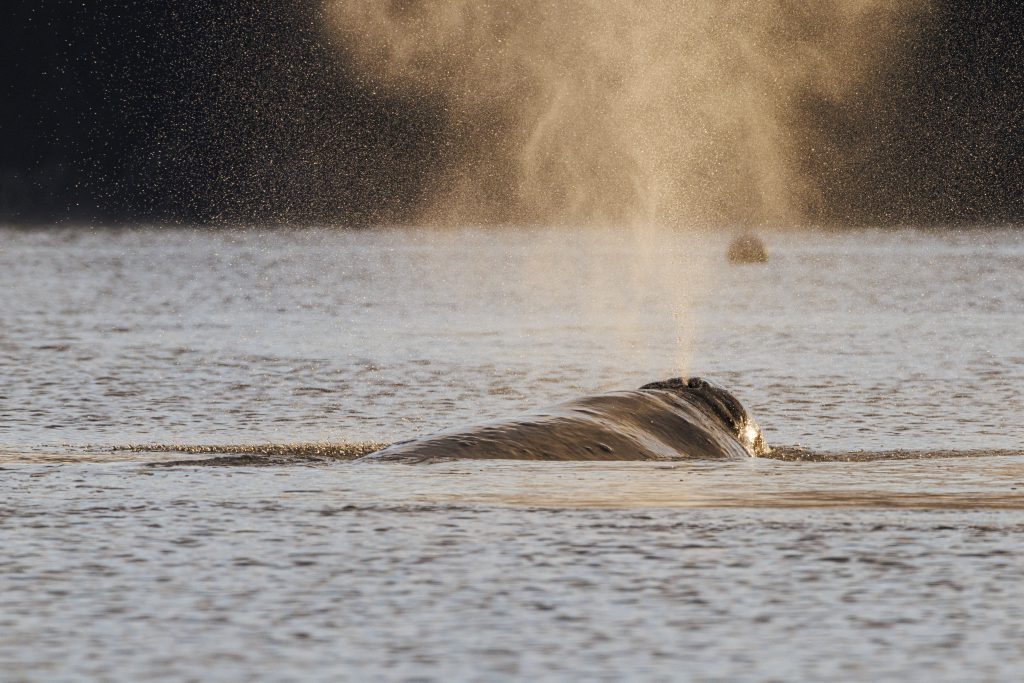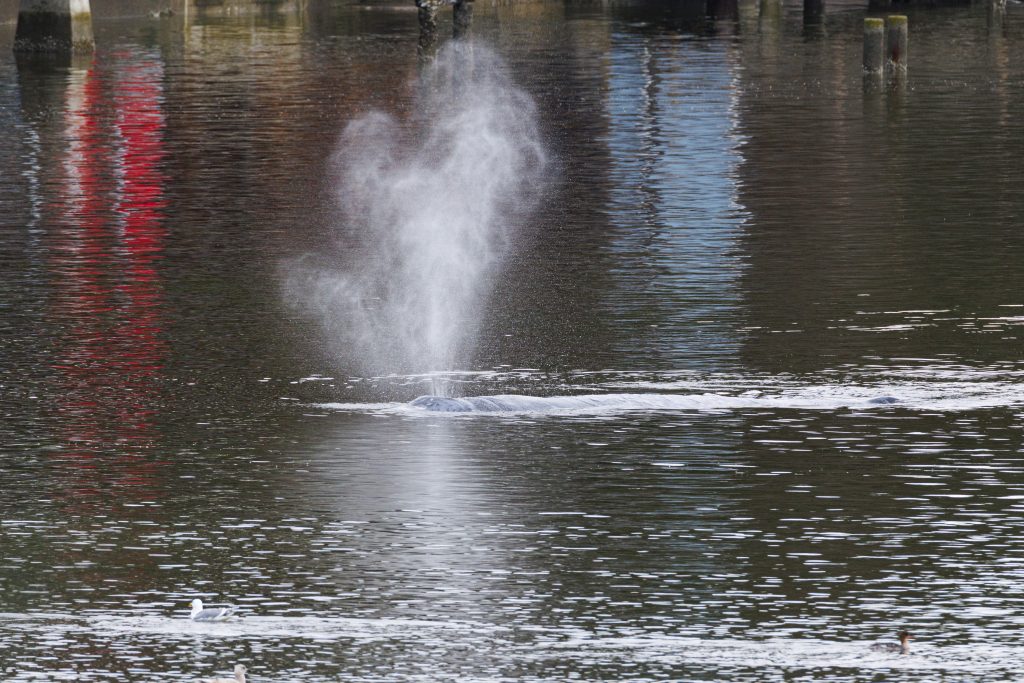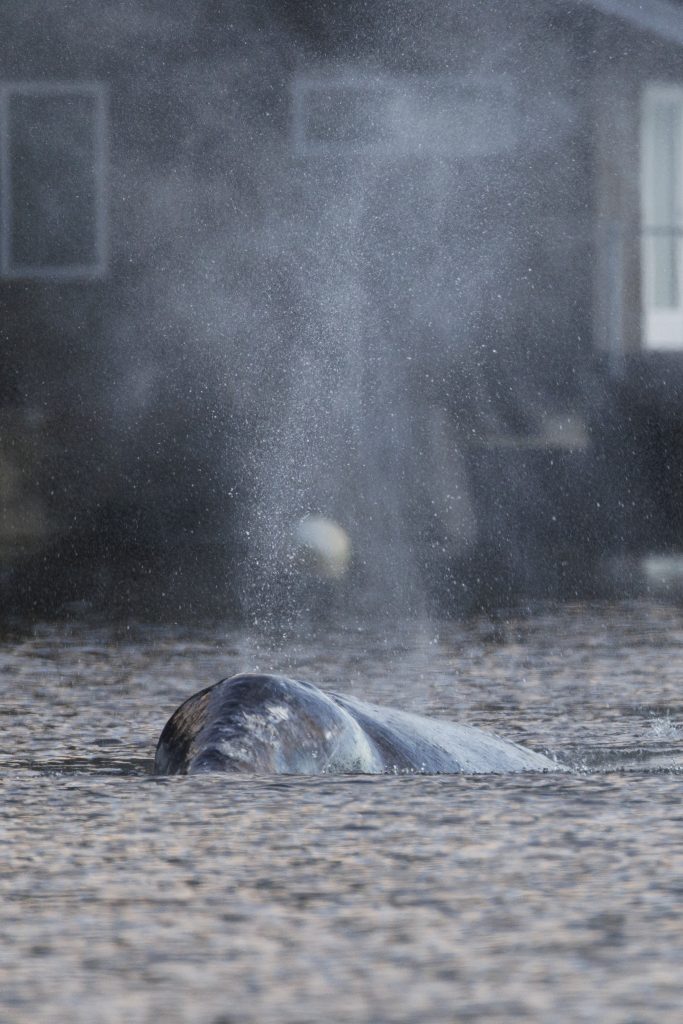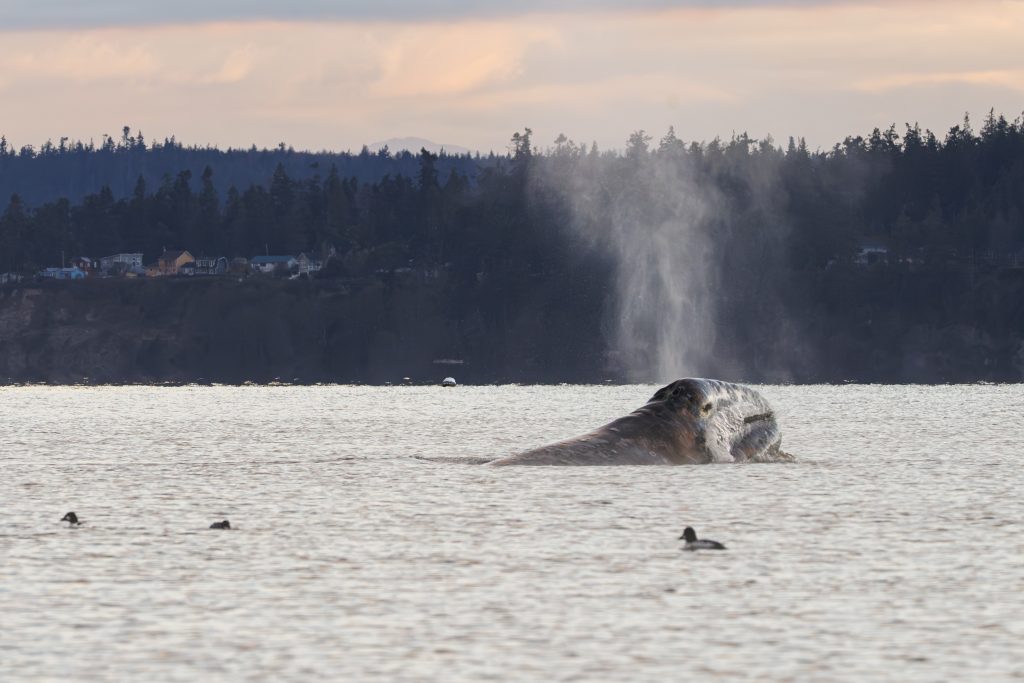
Honeymoon Bay is a shallow protected tidal area on the west side of Holmes Harbor. The shallowest part of the bay is alternately exposed and flooded twice a day during the low and high tides. The ample sunlight makes the fine sediments a haven for marine invertebrates such as clams, ghost shrimp, and oligochaete worms, attracting feeding seagulls, cormorants, diving ducks, otter and harbor seals. A few times each year Honeymoon Bay has a special visitor, though, named Little Patch. Little Patch, a California Gray Whale, is anything but little, measuring over 45 feet and weighing over 30 tons. He is one of about a dozen among the 14,000 Gray Whales in the eastern Pacific that call Puget Sound home for an extended period.
They are affectionately known as Sounders and they have developed specialized feeding methods to fatten up while in Puget Sound. Their favorite haunts are the shallow intertidal zones like those in front of my house, and similar areas in Saratoga Passage on the east side of Whidbey Island from about Penn Cover to Possession Point.
Bottom Feeding
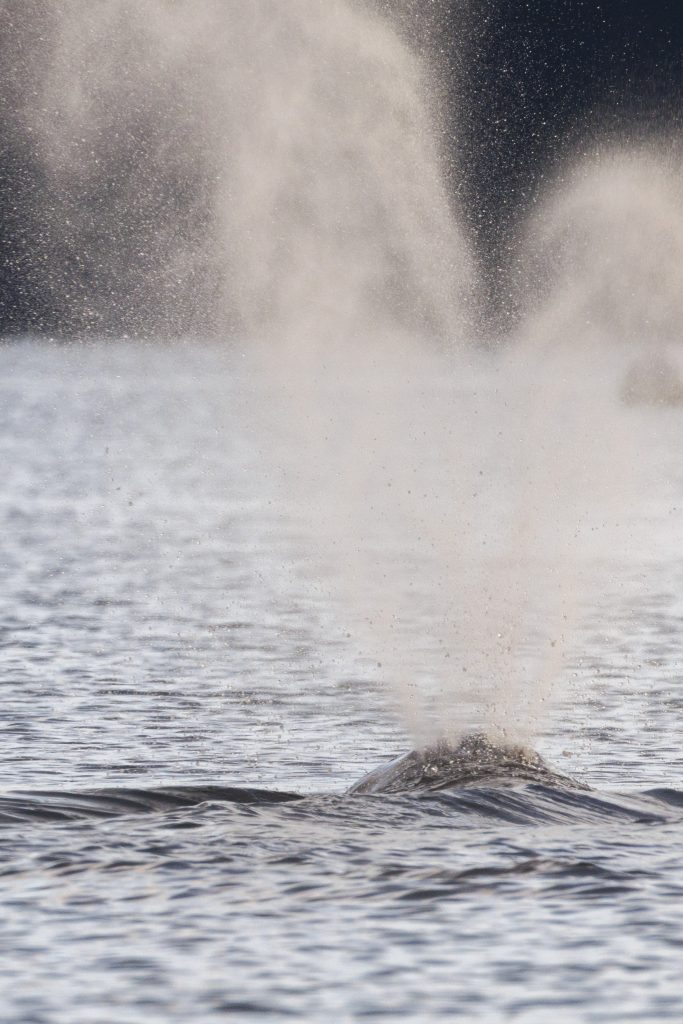
Whales, particularly baleen species like humpbacks and blues, engage in fascinating feeding behaviors. In Honeymoon Bay, Little Patch ventured into water just a little deeper than his girth, turned on his side and lunged forward open-mouthed with a flip of his powerful tail to scoop up a mouthful of mud. He then pushes the mud out through his baleen plates leaving the hapless invertebrates behind. Then gulp.
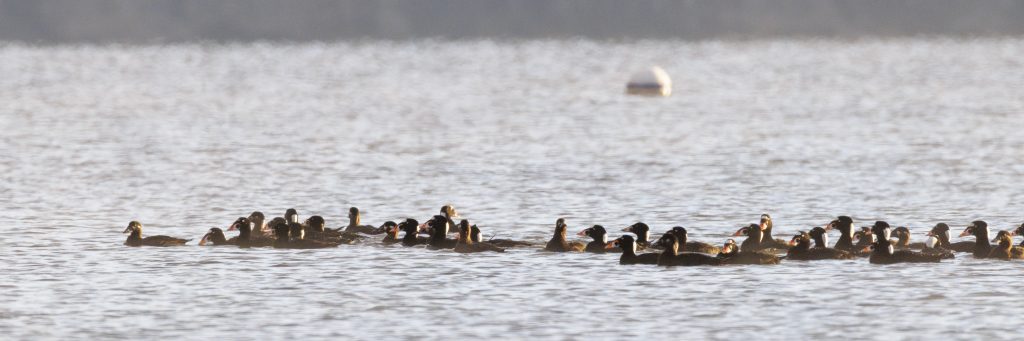
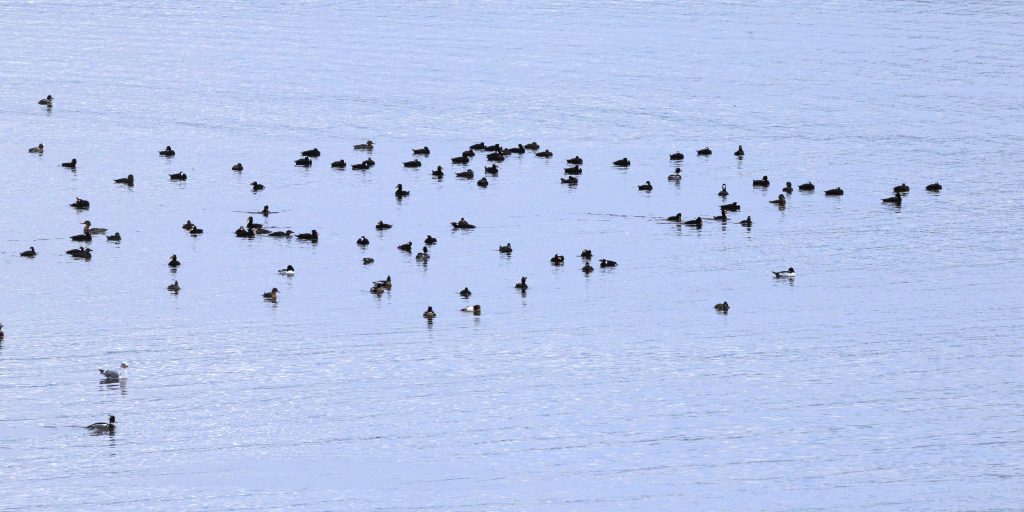
Somehow, flocks of birds arrive at. the scene of the carnage a short time after Little Patch’s arrival. I have no clue how they know he’s come. Do they follow the whale? Can they hear when the whale blows? Pretty soon, the Bay that might have had a dozen ducks soon hosts over 100 Surf Scoters, dozens of gulls, Mergansers, Buffleheads, Barrows Goldeneye and other diving ducks. They happily pick up the stragglers left by the whale. The Surf Scoters are especially fun to watch as they hunt as an organized pack in a long line. I’ll explore their behavior a little more in another post. Long after the whale leaves. typically after 1 to 3 hours of feeding around high tide, the ducks keep feeding. When the flats are exposed at low tide, a myriad of elongated pits 8 feet wide and 20 feet long pock-mark the surface. The seagulls and crows continue dining in the standing water in each whale pit.
Witnessing this behavior is a rare and thrilling experience for visitors and scientists alike. It not only showcases the intelligence and adaptability of whales but also underscores the ecological importance of Honeymoon Bay as a feeding ground.
Gallery of Photos from the Whale Feeding Event
Experiencing a whale feeding in Honeymoon Bay is a reminder of the incredible wonders that our oceans hold. Be sure to visit responsibly and cherish these moments of natural beauty.